Getting Started
RNGTech is a technology mod that treats machines like RPG characters. A machine's body, the chassis, sets its base stats and limits. The Gear you install inside it does the real work. Machines, Gear parts, tool parts, and Battery Cells each roll their own rarity and affixes, so two Crushers of the same stage can play very differently.
Progress runs through nine stages, from flint and wood at Stage 0 to exotic materials at Stage 8. This page walks you through them in order. For exact ingredients, temperatures, and amounts, use the recipe tables on each machine page or JEI in game, because modpacks can change them.
Installing
| Requirement | Version |
|---|---|
| Minecraft | 1.21.1 |
| Mod loader | NeoForge 21.1.228 or newer for 1.21.1 |
| Java | 21 |
Download RNGTech from CurseForge or GitHub Releases and put the JAR in your instance's mods folder. For multiplayer, install it on both the server and every client.
These mods are optional. RNGTech works without them and adds extra features when they are present:
| Mod | What RNGTech adds |
|---|---|
| JEI | Recipe categories for every RNGTech machine, a Gear lookup that shows which parts fit each machine, and ore generation pages with depth and hardness. |
| Jade | Machine overlays when you look at a placed RNGTech block. Sneak to see more, such as time remaining and output per minute on processing machines. |
| GuideME | This wiki as an in-game guide. Hover an RNGTech item and hold the guide key to open its page. |
| Applied Energistics 2 | A bridge connector that links AE2 networks through Universal Cable. |
| Refined Storage | A bridge connector that links Refined Storage networks through Universal Cable. |
Back up your worlds before updating, and read the release notes for the version you install.
How RNGTech works
Every machine is built in layers, and each layer is its own item with its own roll. When a machine feels weak, the cause is usually its Gear rather than its chassis.
- Chassis. The placed machine block. It sets base stats and caps how advanced its Gear can be. A Gear part's stage can be equal to or lower than the chassis stage, never higher, so mixing old and new parts is normal. See Stages.
- Gear. Parts you install in a machine's Gear tab. Crush Heads set how hard an ore a Crusher handles, Heat Cores set how hot a Furnace or Metal Press gets, and Molds pick what a press makes. See Gear.
- Battery Cells. Gear that stores FE and sets how fast a machine takes it in. Most machines run slower or produce less without one. See Battery Cells.
- Rarity and affixes. Each rolled item is Normal, Magic, or Rare, and Magic and Rare items carry random affixes that change their stats. See Rarity and Affixes.
- Refinement Potential. Each rolled item also has a budget you spend to add, upgrade, reroll, or remove affixes. Higher-stage items roll a bigger budget. See Refinement Potential.
- Machine Mastery. Placed machines earn XP from their work and spend points in a passive tree. See Machine Mastery.
Identifying new items
Crafted machines, Gear parts, tool parts, and Battery Cells come out unidentified. The crafting preview keeps the roll hidden on purpose. To reveal one:
- Put a single unidentified item alone in a crafting grid and take the result. Repeat for each item in a stack.
- Or place an unidentified machine block. Only the placed block is identified; the rest of the stack stays unidentified.
Start: tools
You gather your own materials, so the first job is a set of tools. RNGTech tools are Modular Field Tools built from a separate head and rod, and each part keeps its own roll. See Modular Tools for the full details and Tool Bench for building them.
- Craft a
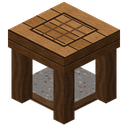 Tool Bench. It needs no iron.
- Craft a
 Flint Pick Head and a
 Wooden Tool Rod, and assemble a
 Modular Pick in the bench's Build tab.
- Add Flint Shovel and Axe heads when you want them. You can swap a head onto an existing rod instead of building a new tool.
- Install a
 Tiny Anvil in the bench's Gear tab. It is never used up and unlocks the heavy tools: Hammers break a 3×3 area, Diggers clear 3×3 of dirt or sand, and Treefellers fell whole trees.
- Craft a
 Forming Hammer and hammer iron and copper ingots into plates. Plates lead to Iron and Copper heads, which mine faster than flint.
- Set up a
 Crude Recycler with a
 Hand Crank on top. It lets you win back materials from spare parts and bad rolls by hand. See Component Recycler.
Ore hardness
RNGTech ores have a hardness from 1 to 8, separate from vanilla mining tiers. A Modular Pick or Hammer can only mine ores up to its head's hardness. Flint heads reach hardness 1, which covers Iron and Copper ore, and better heads reach further. See Ore hardness on the Modular Tools page for every head's reach.
Stages 1–2: first power and ore doubling
Your first factory goal is to get more than one ingot per ore. Early machines pass power to whatever they touch, so you can build this without cables.
- Craft a
 Machine Frame and an
 Iron Battery Cell. Battery Cells go in a machine's Gear tab.
- Build a
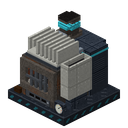 Crude Solid Fuel Burner and install an
 Iron Heat Core, an
 Iron Fuel Box, and a Battery Cell. It burns coal, charcoal, and wood and pushes FE into neighbouring machines. See Solid Fuel Burner.
- Build an
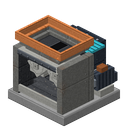 Iron Crusher Chassis with an
 Iron Crush Head and a Battery Cell, and place it next to the burner. See Crusher.
- Crush raw metal before you smelt it. One raw metal gives 2 crushed, and a Silk Touch ore block gives 3. Crush the crushed material again into dust for faster, cheaper smelting. See Stages for the whole chain.
- Build the
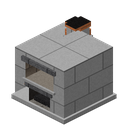 Furnace. It burns ordinary furnace fuel and reaches the heat that crushed ore and dust need. Electric Furnaces come later, once you can make circuits. See Furnace.
- Pick a Battery Chassis to store power. The
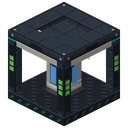 Iron Battery Chassis is simple and never leaks. The
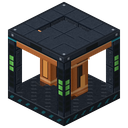 Copper Battery Chassis holds two cells and moves FE faster, but leaks a little while idle.
Farms can also make power. The Bio Generator burns crops, seeds, and saplings, and the Wooden Composter turns plant scraps into  Composted Biomass, a much denser fuel. The Stage 0 wooden machines and the
 Potato Battery Cell are fun novelties, but they are not a base for a factory.
Stages 3–4: the steel factory
Here recipes start to care about temperature, machines need steady FE, and from Stage 4 a machine can fail a job when its heat, stability, or power is off. Your goal is a park of Steel machines you keep for a long time.
- Make Bronze. Crush copper and tin into dust, combine three Copper Dust, one Tin Dust, and one Coal Dust into
 Bronze Blend in a crafting grid, and smelt the blend in the Furnace. Hammer Bronze Ingots into plates with the Forming Hammer.
- Get Nether Quartz. Circuit blanks need it, so plan a trip to the Nether.
- Build the
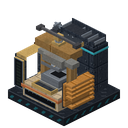 Crude Metal Press. Install a
 Bronze Heat Core, a
 Circuit Mold, and a Battery Cell, then press a
 Basic Circuit Blank into a
 Basic Electric Circuit. The Crude press never ruins an input: if conditions are wrong, it waits. See Metal Press.
- Learn heat. A job waits until the machine reaches the recipe's minimum temperature. Heat Cores raise the temperature. Heat stability keeps it steady, and Stage 4 and higher recipes need a minimum stability too.
- Build an electric Furnace. The
 Iron Furnace Chassis is the plain baseline. Copper heats faster but draws more power, and Bronze runs hotter and is faster on alloy blends.
- Build a Resonance Calibrator. The
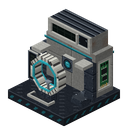 Iron Resonance Calibrator Chassis turns ordinary plates, coils, and circuits into calibrated components. Most Stage 3 and higher machines need calibrated components in their recipes, so this is the gate into the midgame.
- Make Steel. Build a
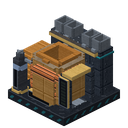 Bronze Alloy Furnace Chassis with a Bronze Heat Core. It makes
 Steel Blend to smelt in the Furnace, and direct Steel Ingots once it is hot enough. See Alloy Furnace.
- Build the Steel
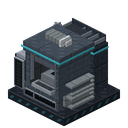 Metal Press with a
 Steel Servo. It is faster and handles demanding plates, casings, and circuits, but it can fail a job and leave a recoverable failure item. Keep the Crude press for safe, slow work.
- Upgrade to Steel. Press a
 Reinforced Machine Frame, then build the
 Steel Crusher Chassis,
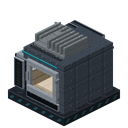 Steel Furnace Chassis, and
 Steel Battery Chassis. A
 Steel Crush Head handles hardness 4 recipes, and a Steel Pick Head with a Diamond Tip mines Aluminum and Osmium ore.
Two recovery machines become worth building now. The Potential Reactor turns unwanted rolled items into FE and strips them, and the Component Recycler returns crafting materials from the stripped item. Run old Gear through the reactor first, then recycle what comes out.
Your power options also widen: the Corrosion Cell burns metal plates in electrolyte, Solar Panels need circuits and open sky, and the Algae Photobioreactor grows Bio Generator fuel from water, carbon gas, and light. A Wooden Dehumidifier supplies water without pumps.
Stages 5–6: fluids and chemistry
Stages 5 and 6 are about fluids and gases. Gases behave like fluids: they use the same tanks, buckets, and cable connectors. Machine sets now come in Aluminum and Titanium, and older Gear still fits.
- Craft an
 Advanced Machine Frame. Stage 5 and 6 machine bodies need it.
- Gasify Coal Dust and water into Syngas in the Coal Gasifier, and burn it in the Syngas Combustor. It is the step up from burning coal. Its Carbon Exhaust feeds algae.
- Build the Cavitation Generator, which spins a rotor through water for FE.
- Build the Silica Gel Dehumidifier for steady water that works underground.
- Build the Melter and make Lubricant, which later Servos and frame parts need. It also makes methane from algae for gas chemistry.
- Use the Component Assembler to make Battery Cells and other parts in bulk.
- Reform methane with water in the Steam Methane Reformer for Hydrogen. Your old Bio Generators can supply methane too: fit them with a Fluid Pump for the Methane take-off. Fit the Cavitation Generator with nitrogen Gear to split water into Nitrogen.
- Combine Nitrogen and Hydrogen in the Ammonia Synthesizer, and burn the Ammonia in the Fuel Cell.
Steel and Titanium Resonance Calibrator sets calibrate the components the next stages ask for.
Stages 7–8: late game
Stages 7 and 8 are permanent infrastructure for high FE/t lines. Late recipes can ask for calibrated components with high stability, so watch the stability and heat on your Gear.
- Press an
 Elite Electric Circuit.
- Build a
 Titanium Alloy Furnace Chassis with a
 Titanium Heat Core and a
 Titanium Alloy Crucible, and alloy Tungstensteel, Nullite, and Aethergold.
- Craft an
 Exotic Machine Frame and upgrade your Crusher and Furnace to Tungstensteel. Leave room for power and logistics to grow around them.
- Build
 Nullite Battery Cells and a
 Nullite Battery Chassis.
 Aethergold Battery Cells have the highest burst output and never leak.
- Press an
 Ultimate Electric Circuit.
- Build the Vacuum Collapse Generator, the Stage 7 generator. It collapses
 Void Catalyst into large batches of FE.
- Build the Exotic Affix Forge, where you choose exactly which affix to change.
Exotic machine sets with Exotic Battery Cells are the top stage. Naquadah, the Stage 8 ore, needs an Exotic head to mine.
Power basics
RNGTech machines run on FE. Generators push FE into neighbouring blocks, and every powered machine has a small internal buffer plus a Battery Cell slot.
- Install a Battery Cell. Most machines run slower or produce less on their internal buffer alone.
- Store power. A Battery Chassis holds several cells and smooths out gaps between generation and use.
- Watch the FE per tick. Each recipe costs a fixed amount of FE. A faster machine finishes sooner but draws more FE per tick, so speed alone does not save power.
- Stage 5–8 materials cost more. Recipes for those materials cost 2×, 3×, 4×, and 6× the early FE.
Typical generators by stage, before rolls and Gear bonuses:
| Stage | Generator | Output |
|---|---|---|
| 1–4 | Solid Fuel Burner | 24, 40, 64, or 96 FE/t, depending on the Heat Core |
| 1–5 | Solar Panel | 4 to 20 FE/t per panel on a clear day |
| 2 | Bio Generator | About 8 FE/t |
| 4+ | Corrosion Cell | Depends on the plate or Anode |
| 5 | Syngas Combustor | 240 FE/t |
| 6 | Fuel Cell | 600 FE/t |
| 7 | Vacuum Collapse Generator | About 1,000 FE/t |
The Potential Reactor and Cavitation Generator also generate FE. See each page for details, and Power Chains for how each generator connects to the machines that fuel it.
Logistics basics
Early machines share power by touching. Once you are past the first Furnace, build Universal Cable. One  Cable carries FE, fluids, and items. A
 Universal Connector on the cable next to each machine decides what moves, which way, and how fast, through the connector modules you install in it.
- The
 Crude Energy Connector is a simple crafting recipe. Basic and higher Energy, Fluid, and Item Connectors are pressed in a Metal Press with a
 Connector Mold.
- Each module has a channel from 0 to 15, and connectors only exchange with others on the same channel.
- An Energy Connector's tier caps the FE it moves each tick, in both directions. Generators and most machines do not limit their own FE, so the connector tier is usually what limits a power line.
- A
 Wrench turns individual cable links on and off and shows a connector's settings. A
 Configurator copies one connector's settings onto others.
- Fluid and Compressor Tanks store fluids and gases.
Automation reaches a machine's process slots, not its installed Gear. Battery Cells are the common exception: many machines accept them through a side. Each machine page lists its sides under Automation. Factory chains are the intended way to autocraft; Automation explains how machines with several ingredients take them without jamming.
Refinement
The Affix Forge changes the affixes on loose machine items, Gear parts, and Battery Cells. Placed machines refine from their own Refinement tab, and tool parts refine in the Tool Bench. Every operation spends Refinement Potential.
- The base forge adds an affix with an
 Affix Injector, upgrades a random affix with an
 Affix Upgrader, and removes a random affix with a
 Nullifier Coil.
- Forge upgrades unlock lenses that steer which affix you get, crystals that change an operation's cost or side effects, and catalysts that raise a Magic item to Rare.
Spend the budget deliberately. A Magic part with two good affixes is a strong candidate to raise to Rare. See Rarity and Affixes for how rolls and costs work.
Mastery and Ascendancies
Every placed machine earns its own Mastery XP from successful work and spends points in the passive tree on its Mastery tab. Mastery stays with the machine when you break and move it, so level the machines you plan to keep.
A machine with a Stage 4 or higher chassis can spend an  Ascendancy Seal I from your inventory to choose one of its family's ascendancies. Seals are crafted from Stage 5 materials, and Seals II and III from Stage 7 and 8 materials. See Ascendancies.
When a machine underperforms
- Check its Gear first. A missing Battery Cell, a Crush Head below the recipe's hardness, or a Heat Core that cannot reach the recipe's temperature explains most slow or stalled machines.
- Check the recipe. Recipe tables list minimum temperature, temperature stability, and hardness. Hover the status squares on the Process tab for what is missing.
- Check power. From Stage 4, a power drop in the middle of a job can cause a failure. Servos and Battery Cells help.
- Check connectors. When power or fluid does not move, check each connector's mode and channel. A red warning on the Energy tab means the machine has no FE on that connector's Attach As side.
- Read it with a comparator. A Redstone Comparator next to a machine outputs 15 when the machine is blocked (it wants to work but cannot, for example with no power, a full output, or a jammed jaw), 8 while it runs, 4 while paused by redstone, and 1 while idle with nothing to do. Use it to light a lamp or sound a note block when a line stalls.
- Check the roll. Compare your Gear's affixes with what the recipe needs, and refine or recycle the part instead of rebuilding the machine.
See also
RNGTech wiki
| Guides |  Automation · Battery Cells ·  Dormant Machines · Gear ·  Getting Started ·  Heat · Machine Mastery · Machine Stats ·  Modpack Creators ·  Power Chains · Rarity and Affixes ·  Stages ·  Uniques |
|---|---|
| Processing | Alloy Furnace ·  Component Assembler ·  Component Recycler · Crusher · Furnace ·  Melter · Metal Press · Resonance Calibrator ·  Wooden Composter |
| Power generation |  Bio Generator ·  Cavitation Generator ·  Corrosion Cell ·  Fuel Cell ·  Potential Reactor · 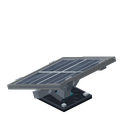 Solar Panel · Solid Fuel Burner · Syngas Combustor · 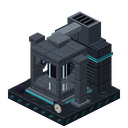 Vacuum Collapse Generator |
| Energy storage | Battery Chassis |
| Fluids and gases | 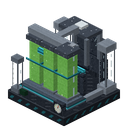 Algae Photobioreactor · 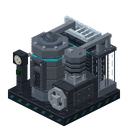 Ammonia Synthesizer ·  Coal Gasifier ·  Fluid and Compressor Tanks ·  Silica Gel Dehumidifier ·  Steam Methane Reformer ·  Wooden Dehumidifier |
| Refinement |  Affix Forge ·  Exotic Affix Forge |
| Logistics | Universal Cable |
| Tools |  Forestry Cart Station ·  Miner's Companion · Modular Tools · Tool Bench |