Stages
A stage is RNGTech's material tier. Every machine chassis, Gear part, tool part, and Battery Cell has a stage from 0 to 8, set by the metal it is made from. Stage 0 is wood and flint, Stage 1 is Iron, and Stage 8 is Exotic, the top of the ladder.
Stages decide three things:
- What Gear fits. A chassis only accepts Gear up to its own stage. See Chassis stage and Gear.
- What a rolled item is worth. Higher-stage items roll a larger Refinement Potential budget and better affix tiers. See Stage and rolls.
- What a recipe costs. Higher-stage metals need hotter machines, harder Crush Heads, and more FE.
Stage is not the same as affix tier. Tier describes how strong one affix is; stage describes the material. See Rarity and Affixes for tiers.
The stage ladder
| Stage | Name | Main materials | What opens up |
|---|---|---|---|
| 0 | Primitive | Wood, flint, stone | Tool Bench and flint tools, the Wooden Crusher, the fuel-burning Furnace, Potato Battery Cells. |
| 1 | Iron | Iron | The first powered machines: Solid Fuel Burner, Iron Crusher, Iron Battery Chassis, Iron Resonance Calibrator, Solar Panels. |
| 2 | Copper | Copper | Faster energy transfer and heat. Copper machine sets, the Wooden Dehumidifier. |
| 3 | Bronze | Bronze, tin, zinc, gold | The first alloy. Basic Electric Circuits, the Crude Metal Press, the Bronze Alloy Furnace. |
| 4 | Steel | Steel, invar, nickel, lead, silver | Stable midgame machines, the Steel Metal Press, the Lead Furnace, the Corrosion Cell. The first recoverable processing failures. |
| 5 | Aluminum | Aluminum, sparksteel, osmium | Gas power: Coal Gasifier, Syngas Combustor, Cavitation Generator, Silica Gel Dehumidifier. |
| 6 | Titanium | Titanium, arclite | Chemistry: Melter, Steam Methane Reformer, Ammonia Synthesizer, Fuel Cell, the Titanium Alloy Furnace. |
| 7 | Tungstensteel | Tungstensteel, nullite, aethergold, tungsten, platinum | Late-game machine sets and the Vacuum Collapse Generator. |
| 8 | Exotic | Naquadah, netherite | The top machine sets, Exotic Battery Cells, the Exotic Affix Forge. |
Modpacks can disable materials, change recipes, and swap the Exotic material, so check the recipe tables in your pack.
Materials by stage
Each stage has natural metals you mine and alloys you mix. Ingots set the stage: plates, gears, rods, coils, and casings are recipe forms of the same metal and do not change its stage.
| Stage | Mined metals | Alloys |
|---|---|---|
| 1 |  Iron Ingot |
— |
| 2 |  Copper Ingot |
— |
| 3 |  Tin Ingot,  Zinc Ingot,  Gold Ingot |
 Bronze Ingot |
| 4 |  Nickel Ingot,  Lead Ingot,  Silver Ingot |
 Steel Ingot,  Invar Ingot |
| 5 |  Aluminum Ingot,  Osmium Ingot |
 Sparksteel Ingot |
| 6 |  Titanium Ingot |
 Arclite Ingot |
| 7 |  Tungsten Ingot,  Platinum Ingot |
 Tungstensteel Ingot,  Nullite Ingot,  Aethergold Ingot |
| 8 |  Naquadah Ingot,  Netherite Ingot |
— |
Naquadah is the default Exotic material, and modpacks can substitute their own.
Ores
RNGTech adds eleven ores to the Overworld, each in a stone and a deepslate version. Iron, Copper, and Gold use the vanilla ores. Each ore has a hardness that your pick or hammer head must reach; see Ore hardness for which heads reach which level.
| Ore | Stage | Hardness | Height (Y) | Notes |
|---|---|---|---|---|
 Iron Ore |
1 | 1 | Vanilla | |
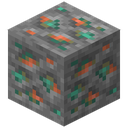 Copper Ore |
2 | 1 | Vanilla | |
 Tin Ore |
3 | 2 | −16 to 96 | Common. |
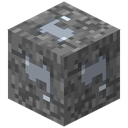 Zinc Ore |
3 | 2 | −16 to 80 | Common. |
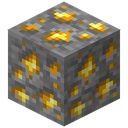 Gold Ore |
3 | 2 | Vanilla | |
 Nickel Ore |
4 | 3 | −32 to 48 | |
 Lead Ore |
4 | 3 | −32 to 40 | |
 Silver Ore |
4 | 3 | −48 to 32 | |
 Aluminum Ore |
5 | 4 | −32 to 64 | |
 Osmium Ore |
5 | 4 | −48 to 24 | |
 Titanium Ore |
6 | 5 | −64 to 16 | Sometimes missing where a vein touches air. |
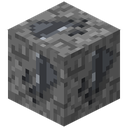 Tungsten Ore |
7 | 6 | −64 to 0 | Rare. Often missing where a vein touches air. |
 Platinum Ore |
7 | 6 | −48 to 16 | Rare. Often missing where a vein touches air. |
 Naquadah Ore |
8 | 8 | −64 to −32 | Very rare, small veins. Often missing where a vein touches air. |
The deeper ores are often cut out of cave walls, so dig into solid rock instead of only searching caves. With the JEI mod installed, each ore has an ore generation page showing its depth, vein size, and hardness for your pack's settings.
Mining an RNGTech ore drops its raw metal, such as  Raw Tin. Fortune increases the drop like it does on vanilla ores, and Silk Touch drops the ore block itself.
Alloys
Alloys have no ore. You make them in the Alloy Furnace, and the Alloy Furnace chassis and its Crucible must both reach the recipe's stage.
| Alloy | Stage | Made from | How |
|---|---|---|---|
| Bronze Ingot |
3 | Copper and tin | Craft  Bronze Blend from Copper, Tin, and Coal Dust and smelt it in a Furnace, or alloy Copper and Tin Ingots with Charcoal. |
| Steel Ingot |
4 | Iron and carbon | Make  Steel Blend in the Alloy Furnace and smelt it, or alloy Iron Ingots with Coal, or with Coal Dust and Charcoal. |
| Invar Ingot |
4 | Iron and nickel | Alloy Furnace. |
| Sparksteel Ingot |
5 | Gold, silver, and redstone | Alloy Furnace, Steel stage or higher. |
| Arclite Ingot |
6 | Copper, silver, and redstone | Alloy Furnace, Steel stage or higher. |
| Tungstensteel Ingot |
7 | Tungsten, steel, and Coal Dust | Titanium Alloy Furnace. |
| Nullite Ingot |
7 | Lead, platinum, and Ender Pearls | Titanium Alloy Furnace. |
| Aethergold Ingot |
7 | Tin, silver, and Glowstone Dust | Titanium Alloy Furnace. |
See the Alloy Furnace recipe table for exact amounts and temperatures.
From ore to ingot
Ore moves up a processing chain. Each step costs a machine and some FE, and pays you back with more ingots per ore.
| Route | Ingots per raw metal | Machines |
|---|---|---|
| Smelt raw metal | 1 | Furnace |
| Crush raw metal, smelt the crushed material | 2 | Crusher, Furnace |
| Crush raw metal, crush again into dust, smelt the dust | 2, faster and cheaper | Crusher twice, Furnace |
- Mine the ore for raw metal. Silk Touch gives the ore block instead.
- Crush it. One raw metal gives 2 crushed material, and one ore block gives 3. Deepslate ore blocks take a little longer to crush.
- Crush again (optional). Each crushed item gives 1 dust in a quick second pass.
- Smelt the crushed material or dust in the Furnace for 1 ingot each.
Smelting crushed material directly is slow, which makes it an easy hopper chain. Crushing it into dust first is the better route: for Iron and Copper, the dust route takes 260 ticks and 6,000 FE per ingot across both machines, against 600 ticks and 7,200 FE for crushed material.
Each metal also has its own pace. Soft, low-melting Lead and Tin process in half the time, while hard metals take much longer: Titanium takes three times as long to crush and smelt, and Tungsten smelts four times slower. FE per craft stays the same, so slow metals just tie up your machines longer. The recipe tables on the Crusher and Furnace pages list each time.
The Crusher's Output Amount stat adds bonus crushed material on the first crush, on top of these numbers. Alloys skip this chain: they have no ore, raw, crushed, or dust form.
Smelting heat
Every form of a metal needs the same smelting heat: raw metal, ore blocks, crushed material, and dust. Your Furnace's Heat Core decides which metals you can smelt at all, whatever form they are in. Raw metal smelts like its ore block, so smelting it directly is the slow, heat-hungry way to get one ingot; crushing it gives two, and dust is the cheapest to smelt.
| Metal | Minimum heat | Needs stability |
|---|---|---|
| Iron, Copper | 800 | No |
| Tin, Zinc, Gold | 1,000 | No |
| Nickel, Lead, Silver | 1,100 | Yes |
| Aluminum, Osmium | 1,300 | Yes |
| Titanium | 1,450 | Yes |
| Tungsten, Platinum | 1,750 | Yes |
| Naquadah | 2,000 | Yes |
See the Furnace for the heat each Heat Core reaches.
Higher-stage metals also cost more FE. Smelting and crushing Stage 5, 6, 7, and 8 metals cost 2×, 3×, 4×, and 6× the Stage 1–4 FE, and their crushing recipes need harder Crush Heads.
Chassis stage and Gear
A machine's chassis stage is the highest stage of Gear it accepts. A Stage 4 Steel Crusher takes a Flint, Iron, Copper, Bronze, or Steel Crush Head, but not an Aluminum one. Lower-stage Gear always fits, so a well-rolled early part can stay in service for a long time.
This cap applies to a machine's main processing Gear:
- Crush Heads in the Crusher.
- Heat Cores in the Furnace, Alloy Furnace, and Solid Fuel Burner.
- Alloy Crucibles and Servos in the Alloy Furnace.
- Fuel Boxes in the Solid Fuel Burner.
- Disassembly Heads and Recovery Filters in the Component Recycler.
- Battery Cells and Servos in Compressor Tanks.
Battery Cells fit most machines at any stage. A few machines limit them, for example the Solid Fuel Burner takes cells up to its own stage, and some gas machines need a minimum cell or Heat Core stage instead. Each machine's Gear section lists its limits, and the Gear page explains the slots.
Two other systems read the chassis stage:
- Some Machine Mastery keystones loosen the cap, such as a Crusher keystone that allows a Crush Head one stage above the chassis.
- A machine needs a Stage 4 or higher chassis before it can choose an Ascendancy.
Each chassis has its own recipe. You never need the previous stage's machine to build the next one.
Machine frames
Most staged machine bodies are built around a frame for their stage band:
| Frame | Used by |
|---|---|
 Machine Frame |
Stage 0–3 bodies, and the Steel Metal Press. |
 Reinforced Machine Frame |
Most Stage 4 Steel and Lead bodies. |
 Advanced Machine Frame |
Stage 5–6 bodies. |
 Exotic Machine Frame |
Stage 7–8 bodies. |
Frames are plain crafting ingredients: they have no stats or affixes, and a frame's tier does not change the finished machine's stats. Each frame is crafted from the one before it. A Reinforced Machine Frame adds 12 Steel Ingots, pressed into four Steel Plates and two Steel Casings in six Metal Press runs. The Exotic frame also needs a  Lubricated Frame Coupling, assembled from Tungstensteel Casing and Lubricant in the Component Assembler.
| Ingredients | Crafting recipe | Notes |
|---|---|---|
| Machine Frame Iron Rod + Iron Ingot + Smooth Stone + Casing |  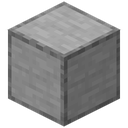  | Requires the Iron material to be enabled. |
| Reinforced Machine Frame Steel Plate + Steel Casing + Basic Electric Circuit + Machine Frame |    | Requires the Steel material to be enabled. |
| Advanced Machine Frame Aluminum Plate + Calibrated Structural Component + Advanced Electric Circuit + Reinforced Machine Frame + Aluminum Casing |     | Calibrated Structural Component must be a Structural calibration, Stage 2+, stability 60+. Requires the Aluminum material to be enabled. |
| Exotic Machine Frame Tungstensteel Plate + Calibrated Structural Component + Elite Electric Circuit + Advanced Machine Frame + Lubricated Frame Coupling |   | Calibrated Structural Component must be a Structural calibration, Stage 3+, stability 80+. Requires the Tungstensteel material to be enabled. |
The Washer Machine Chassis can be crafted from a Machine Frame, but no recipe or machine uses it, so don't spend a frame on it.
Stage and rolls
When a machine, Gear part, or Battery Cell rolls its traits, its stage sets the size of its Refinement Potential budget:
| Stage | Refinement Potential |
|---|---|
| 0 | 1–3 |
| 1–2 | 6–10 |
| 3–4 | 8–14 |
| 5–6 | 14–22 |
| 7–8 | 22–32 |
Tool Heads and Tool Rods roll slightly more. Stage also shifts which affix tiers an item tends to roll: higher stages make high tiers more likely, and the top affix tier only appears on Stage 8 items.
Failures from Stage 4
Stages 0–3 are forgiving. When conditions are wrong, early machines wait, slow down, or produce less, and they keep your input.
From Stage 4, some recipes can fail. Heat outside the safe window, poor temperature stability, or a power drop in the middle of a job builds up failure strain, and when it fills, the input becomes a recoverable failure item such as a  Malformed Ingot or
 Broken Circuit. Smelt a Malformed Ingot in a Furnace to get two nuggets back. Better Heat Cores, Servos, and Battery Cells make the same work safer. See the Metal Press and Furnace for how each machine handles it.
See also
RNGTech wiki
| Guides |  Automation ·  Battery Cells ·  Dormant Machines ·  Gear ·  Getting Started ·  Heat ·  Machine Mastery · Machine Stats ·  Modpack Creators ·  Power Chains ·  Rarity and Affixes · Stages ·  Uniques |
|---|---|
| Processing |  Alloy Furnace ·  Component Assembler ·  Component Recycler ·  Crusher ·  Furnace ·  Melter ·  Metal Press ·  Resonance Calibrator ·  Wooden Composter |
| Power generation |  Bio Generator ·  Cavitation Generator ·  Corrosion Cell ·  Fuel Cell ·  Potential Reactor ·  Solar Panel ·  Solid Fuel Burner · Syngas Combustor ·  Vacuum Collapse Generator |
| Energy storage |  Battery Chassis |
| Fluids and gases |  Algae Photobioreactor ·  Ammonia Synthesizer ·  Coal Gasifier ·  Fluid and Compressor Tanks ·  Silica Gel Dehumidifier ·  Steam Methane Reformer ·  Wooden Dehumidifier |
| Refinement |  Affix Forge ·  Exotic Affix Forge |
| Logistics |  Universal Cable |
| Tools |  Forestry Cart Station ·  Miner's Companion ·  Modular Tools ·  Tool Bench |